
Anonymous or attributed 360 feedback: decide by rater group
Anonymity in a 360 is three separate decisions, not one switch. What each choice buys, the reporting threshold that protects raters, and when to drop it.
Rajendra Kumar · 30 October 2026 · 9 min read
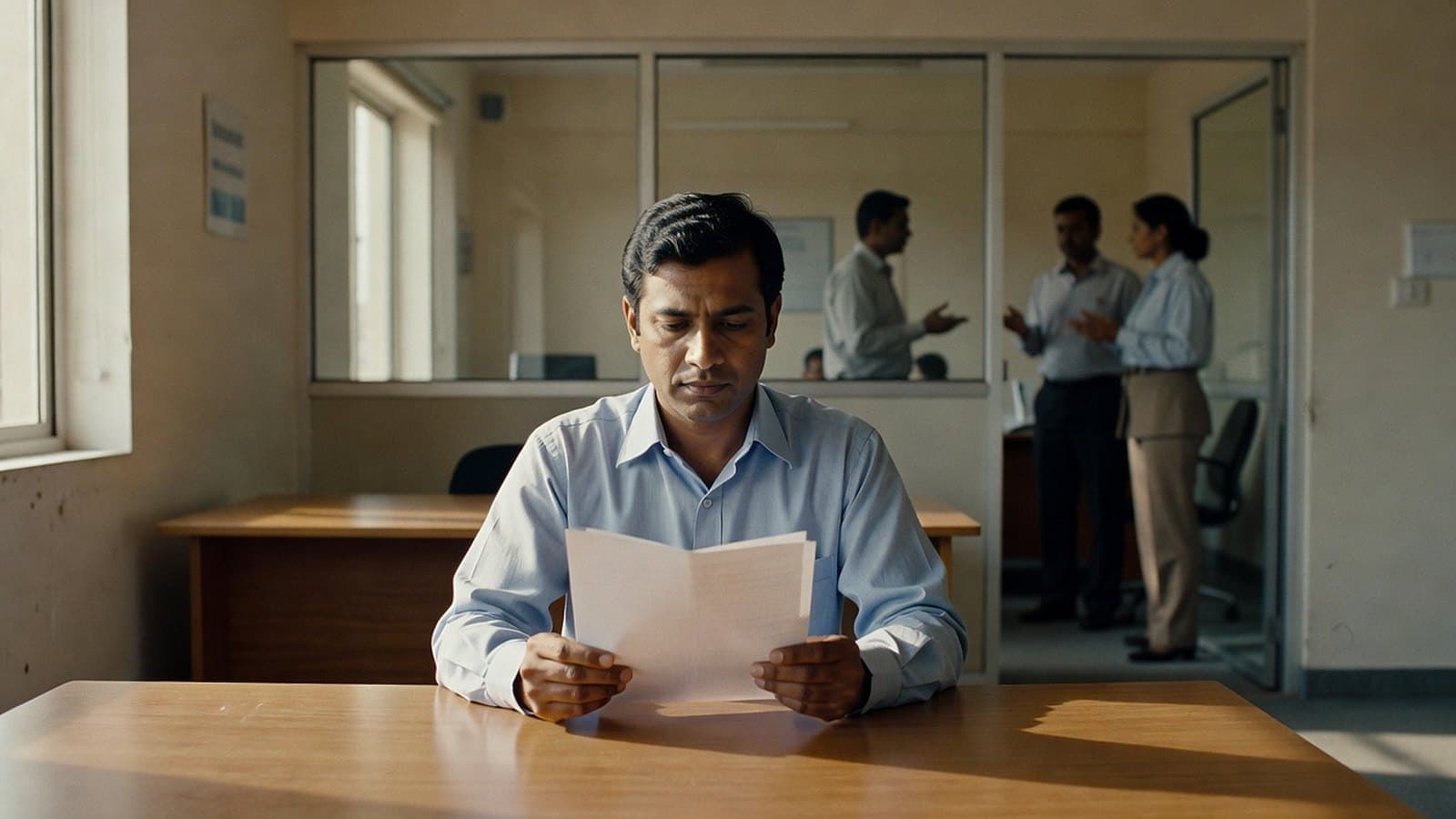
Representational image.
An HR head signs off the 360 configuration in eleven minutes. The vendor form has one field that matters, a toggle marked "anonymous responses", and it is already on. Nobody argues for it. Anonymous sounds like the safe choice, and the policy document says the same thing every year.
Two cycles later a plant manager opens his report. Composite 2.9 on "holds people to agreed standards", with zero comments from the four people who rated him lowest. He knows exactly which four, because his team is five people. He walks into HR and asks who wrote what. HR cannot answer, so he concludes the process is cowardly, and the next cycle his scores go up because people would rather not be blamed for a number they cannot defend.
That is the whole failure in one page: the toggle promised protection it could not deliver at that team size, and it removed the one thing that would have made the number usable, which is an example.
Anonymity is doing three jobs at once
Most 360 platforms sell anonymity as a single property. In practice the toggle is answering three different questions, and the answers do not have to match.
- Protection. Can a rater be punished for what they wrote?
- Accountability. Does the rater have to stand behind a specific, checkable observation?
- Usability. Can the person receiving the feedback act on it?
A single toggle sets all three to the same value. That is why the debate goes in circles. The people defending anonymity are defending protection. The people attacking it are attacking the loss of usability. Both are right, and neither is talking about the same variable.
The research is more uncomfortable than either camp expects. In a field experiment at an insurance company, 38 managers and their subordinates were randomly assigned to an attributed upward appraisal or an anonymous one. Subordinates in the attributed condition rated their managers significantly higher than subordinates who responded anonymously. Managers, meanwhile, preferred the attributed process. Accountability did not produce sharper ratings. It produced friendlier ones, and the managers liked it more (Antonioni, Personnel Psychology, 1994).
The Center for Creative Leadership's practitioner review lands on the same asymmetry from the other side. Supervisors whose ratings are not anonymous tend to use the full range of the scale. Direct reports whose ratings are anonymous tend to score their bosses high, a leniency pattern researchers have watched for decades (CCL, 360-Degree Feedback Best Practices).
So the honest summary is this: attribution buys ratee acceptance and costs candour. Anonymity buys rater comfort and costs specificity. Neither buys accuracy on its own, because accuracy comes from whether the item asks for an observable thing, which is a separate design problem entirely.
What raters actually believe
The perception data explains why the toggle keeps getting flipped back on. In a February 2025 survey of 1,000 US workers, 62 percent said anonymous feedback encourages honesty, while 28 percent said it produces vague and unhelpful comments. The same survey found 74 percent had received feedback they considered unfair, biased or inaccurate, and 79 percent suspected colleagues of using 360s to settle grudges (LiveCareer).
Read those numbers together and the shape is clear. People want the protection and they distrust the output. A well-designed process has to give them the first without pretending the second is not happening.
The method, in the order the work happens
Step 1. Write down what the 360 is allowed to change
Before any identity decision, name the consequence. Development only, meaning the report goes to the participant and their manager and touches nothing else. Or decision-bearing, meaning it feeds a promotion panel, a succession list or a variable pay discussion.
The rule that follows is simple and non-negotiable: the moment a 360 carries a consequence for the person being rated, anonymity for their direct reports becomes a labour relations problem, not a design preference. A rater who believes a low score will cost their manager a bonus, and who can be identified by elimination, is being asked to take a personal risk with no upside. Either keep the 360 developmental, or accept that you are running a formal appraisal and staff it like one.
Step 2. Assign identity per rater group, not per cycle
This is the part most configurations get wrong. Identity should be a property of the relationship, not of the survey.
| Rater group | Default identity | Why |
|---|---|---|
| Line manager | Attributed | They are already known, their rating is one data point, and CCL's observation is that named supervisors use the full scale |
| Peers | Anonymous, threshold-protected | Candour matters more than credit, and peer retaliation is real |
| Direct reports | Anonymous, threshold-protected | Power asymmetry is the strongest argument for protection in the entire instrument |
| Cross-functional stakeholders | Attributed by default | They have no reporting line to the participant, so there is little to retaliate with, and their examples carry weight |
| Self | Attributed, obviously | It is the comparison point for every gap in the report |
This split is not a compromise. It is what the evidence supports: the group with power over the rater gets protection, the groups without it get named.
Step 3. Set the reporting threshold before you invite anyone
Anonymity only exists if the group is big enough that no single response can be reverse-engineered. That number is a policy decision you publish in advance, not something the platform decides.
The working rule: a rater group reports only when it has at least three completed responses. Below three, it merges into a combined "other raters" bucket. At one, it does not appear at all. Anything else is anonymity theatre, and the plant manager in the opening scene is what theatre produces.
Publish the threshold in the invitation email. Raters who know the rule behave differently from raters who suspect the rule is being improvised.
Step 4. Buy accountability without buying identity
You can have a rater stand behind an observation without knowing their name. Four mechanisms do most of the work:
- An attestation before submission. One checkbox: "My ratings are based on behaviour I personally observed in the last six months." Cheap, and it changes the frame from opinion to testimony.
- A required example on every outlier. Any score at the top or bottom of the scale needs one sentence describing a specific incident. This is the single highest-value field in the entire instrument, because it converts a number into a fact the participant can argue with.
- Straight-line detection. A response that gives identical scores to every item, or leaves every comment blank, is dropped rather than averaged in. Say so in the instructions.
- A visible completion rate per group. Raters who know their group's participation is reported tend to take the task seriously, without anyone learning what they wrote.
If you want the item design itself to carry this weight, the six questions in how to build 360 items that surface a blind spot are built for exactly this, because each one demands an incident rather than a verdict. The behaviours those items ask about have to come from somewhere too, and a competency framework managers can actually use is the source that keeps two raters looking at the same thing.
Step 5. Offer a signed channel as a separate door
The cleanest way out of the attributed-versus-anonymous argument is to stop treating it as one question. Run the anonymous instrument as the default, then add an opt-in line at the end: "If you are willing to be named on this feedback, tick here."
The people who tick it are almost always the ones with a real working relationship and something concrete to say. Their comments arrive attributed, which means the participant can go and talk to them. The people who do not tick it stay protected. You get most of the specificity with none of the coercion, and nobody was forced to choose between honesty and safety.
Step 6. Move the wrong items out of the 360 entirely
Some content does not belong in a multi-rater instrument at any anonymity setting. Allegations of harassment, discrimination, safety violations or financial impropriety are formal matters with their own channel, their own record-keeping and, in India, their own statutory process. A 360 comment box is the wrong place for them and anonymity there protects the process from accountability rather than the rater from retaliation.
Write the exclusion into the instructions, with the actual channel named. Raters who know where a serious complaint goes stop putting it in a comment field.
A worked example
An illustrative configuration for a 40-person services firm running a developmental cycle for six managers. The numbers are invented to show the arithmetic, not measured.
| Manager | Direct reports | Peers | Stakeholders | What the report shows |
|---|---|---|---|---|
| A | 6 | 4 | 3 | Three groups, all above threshold, all reported |
| B | 4 | 3 | 2 | Stakeholder group below threshold, merged into "others (n=2)" |
| C | 3 | 3 | 1 | Stakeholder response dropped, not merged |
| D | 2 | 4 | 3 | Direct reports merged into "others", with a note explaining why |
Manager D is the case that matters. She has two direct reports, so her upward feedback will never be anonymous no matter what the toggle says. The right response is not to hide that. The right response is to tell her, in the invitation, that her upward data is merged for confidentiality, and to give her a route to a real conversation with those two people instead of a score.
The honest limit
The evidence here is thinner than the confidence of most 360 vendors suggests. Antonioni's study is 38 managers in one insurance company in 1994, and the CCL finding is a practitioner observation rather than a controlled trial. The live perception numbers come from a US consumer survey, not an Indian enterprise sample. Treat all of it as directional: it tells you which way the trade-off leans, not how large the effect will be in your organisation.
The second limit is that no configuration survives a manager who already knows. In a team of four, everyone can guess. The threshold protects you from the arithmetic, not from the politics, and the only real defence is a process where the participant hears the feedback in a conversation rather than reading it in a PDF.
What to do on Monday
Open your current 360 configuration and list the rater groups. Next to each, write the number of people who actually completed it last cycle. Any group under three, mark it for merging. Then check whether your invitation email states the threshold, and whether your instrument requires an example on an outlier score. Those three changes take an afternoon and fix most of what people dislike about the process, without touching the anonymity toggle that everyone argues about. If your platform cannot do per-group identity or a submission threshold, that is a product requirement worth writing down, and it is the kind of thing our 360 module was built around.
Next step
Run the same measurement on your own team
Bring a real team and a real competency. We set up the assessment, run one cycle, and walk you through the report so you can judge the output yourself.
Written by
Rajendra Kumar
Head of Enterprise Business, Conceptial
Runs enterprise work at Conceptial, the training and consulting firm behind BolderBrain. Two decades of building assessment and development programmes for Indian enterprises.